

How Binji Empowers Overseas Factories in the Era of Smart Knitting Automation
The global textile manufacturing landscape is undergoing a profound transformation. As labor costs rise and market demands for speed, consistency, and customization intensify, automation is no longer a luxury but a fundamental necessity for maintaining cost competitiveness and securing a sustainable future. For overseas factories, particularly in emerging manufacturing hubs, the transition from conventional, labor-intensive operations to smart, automated production is a critical strategic pivot. Leading this technological revolution, Binji stands as a pivotal partner, providing the advanced machinery and integrated digital solutions that make this transition not only possible but also highly efficient and profitable.
The Imperative for Automation in Global Textile Hubs
Overseas factories face unique challenges: fluctuating labor availability, pressure to reduce time-to-market, and the constant need to improve quality while managing costs. Upgrading from conventional circular knitting machines to intelligent, automated systems addresses these challenges head-on. Automated production significantly reduces dependency on skilled manual labor, mitigates risks associated with human error, and ensures uninterrupted, consistent output—key factors for factories supplying global fashion brands and large retailers.
Binji’s Technological Arsenal: Engineered for Intelligent Production
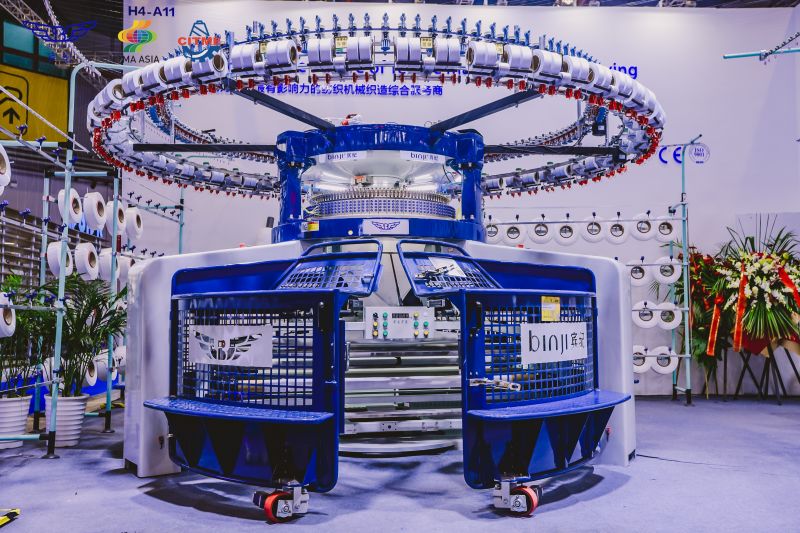
Binji’s support for this industrial upgrade is built on a foundation of innovative mechanical engineering and sophisticated digital control systems. The company’s latest generation of circular knitting machines is designed as complete automation-ready platforms.
Core Fabric Machines: The advanced Single Jersey Circular Knitting Machine and Double Jersey Circular Knitting Machine models are equipped with state-of-the-art features like automated needle selection systems, which allow for quick pattern changes and fault minimization without manual intervention. Integrated intelligent monitoring systems provide real-time data on production speed, efficiency, and potential defects, enabling predictive maintenance and minimizing downtime. Furthermore, the incorporation of high-efficiency, energy-saving motors reduces overall operational costs and supports factories' sustainability goals.
Complex Pattern Production: For factories targeting the mid-to-high-end market, Jacquard Circular Knitting Machines from Binji are transformative. Powered by advanced computerized pattern control systems, these machines offer unparalleled precision in complex design execution. The ability to switch styles and patterns rapidly via digital interfaces is ideal for factories serving fast-fashion brands or those with small-batch, high-mix production needs. This agility turns a traditional constraint into a competitive advantage.
Finishing Stage Innovation: Automation extends beyond the knitting process itself. Binji’s Open Width Circular Knitting Machines play a crucial role in automating the post-knitting workflow. By delivering large-diameter, crease-free fabric rolls directly, these machines drastically reduce the need for manual handling, re-rolling, and downstream reprocessing. This integration streamlines the entire production chain, enhancing efficiency from knitting to finishing.
Beyond Hardware: Collaboration and Customized Integration
Understanding that a successful transition requires more than just advanced hardware, Binji distinguishes itself through deep collaborative partnerships. The company’s R&D team works closely with overseas factory engineers and management to understand local specificities.
This collaborative approach leads to customized configurations tailored to diverse needs, such as:
Yarn Compatibility: Adapting machines to handle locally sourced or specialty yarns efficiently.
Climate-Specific Settings: Optimizing lubrication and tension controls for factories operating in high-humidity, high-temperature, or other challenging environments.
Connectivity and Data Integration: Ensuring machines can interface with factory-wide Manufacturing Execution Systems (MES) or ERP systems for holistic production management.
Training and Support: Providing comprehensive training programs to equip local technicians with the skills to operate and maintain the new automated systems.
This ensures a smoother integration of automation technology, minimizes disruption during the transition phase, and guarantees long-term product consistency and machine reliability.
The Strategic Outcome: Future-Proofing Global Manufacturing
By partnering with Binji, overseas factories achieve more than just a machine upgrade. They embark on a path toward a future-proof manufacturing model. The benefits are multi-faceted: enhanced competitiveness through lower unit costs and higher quality, increased resilience against labor market shifts, and the agility to respond to fast-changing fashion trends. Ultimately, Binji’s role is that of an enabler—transforming the vision of a fully automated, smart knitting factory into a tangible, operational reality for manufacturers worldwide, securing their place in the next chapter of global textile production.
In conclusion, as the industry pivots decisively towards Industry 4.0, Binji’s combination of robust, automated machinery and a partnership-driven, customized approach provides overseas factories with the essential toolkit and support network. This empowers them not just to adapt to the new era of smart knitting, but to thrive within it, turning the challenges of globalization into opportunities for growth and leadership.