

Improving Efficiency and Reducing Cost: Overseas Factories Adopt Binji Machinery
As global textile markets become increasingly competitive, knitting mills across Turkey, Vietnam, Bangladesh, India, Central America, and South America are under mounting pressure to improve operational efficiency and reduce production costs. Rising labor expenses, volatile energy prices, and the growing need for consistent product quality have led many manufacturers to seek more advanced machinery solutions. In response to these challenges, a growing number of overseas factories are upgrading to Binji Circular Knitting Machines—a move that has delivered immediate improvements in speed, reliability, energy usage, and overall cost performance.
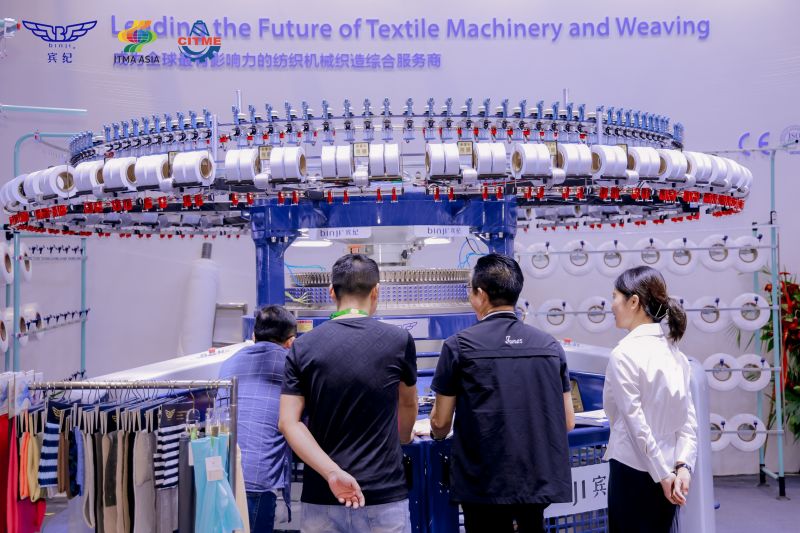
The Single Jersey Circular Knitting Machine from Binji has become a top choice for factories producing high-volume fabrics such as T-shirts, activewear, and casualwear. Known for its high-speed operation and low energy consumption, the machine enables mills to increase daily output without investing in additional units or expanding floor space. Its optimized transmission system and precise mechanical structure help reduce friction and heat, directly lowering electricity usage. Many overseas customers report that this combination of high speed and low energy input results in a significant reduction in cost per kilogram of fabric produced—an essential advantage for large-scale operations.
Binji’s Double Jersey Circular Knitting Machine is similarly designed to reduce long-term operational costs. Its reinforced frame provides exceptional stability during high-speed knitting, minimizing vibration and lowering the wear rate on needles, sinkers, and cams. Over time, these mechanical improvements translate into fewer part replacements, shorter maintenance cycles, and reduced downtime. Factories focusing on rib, interlock, waffle, and structured fabrics find that the durability of this model allows them to run more efficiently while maintaining consistent fabric quality, even under heavy production loads.
For manufacturers producing sportswear, fashion fabrics, or decorative textiles, the Jacquard Circular Knitting Machine offers another layer of efficiency. Its electronic pattern control system ensures accurate design reproduction, reducing the likelihood of pattern errors that lead to fabric rejection. By minimizing defects and repeated adjustments, factories save both yarn and labor. Additionally, the electronic jacquard technology provides faster pattern changes, enabling mills to shift between different orders more quickly and operate more flexibly in fast-changing markets.
Dyeing factories also benefit from Binji’s advanced engineering. The Open Width Circular Knitting Machine eliminates common issues such as center creases and uneven dye penetration, which often result in fabric loss or reprocessing. By enabling fabric to exit the knitting machine in open-width form, the model simplifies finishing procedures and supports high-quality dyeing for color-sensitive brands. Less waste and fewer defects directly contribute to lower production costs and better utilization of raw materials.
Across global markets, the trend is clear: factories adopting Binji machinery report higher output, fewer stoppages, faster return on investment, and long-term operational savings. Whether producing basic jerseys or technical sports textiles, manufacturers benefit from improved efficiency, reduced waste, and enhanced fabric consistency. In an increasingly crowded and cost-driven textile industry, Binji’s reliable and energy-efficient knitting machines provide the competitive advantage that international factories need to secure more orders and maintain sustainable profitability.